

Is There Life After Death?
I suspect I may be a bit unusual.
‘No shit’ you maybe thinking, ‘a Life Coach that swears so much, blogs on weird controversial topics and can’t keep his mouth shut about anything he has an opinion on, unusual?’
Yeh, well I guess that’s a tad unusual, but I think my weirdness goes much deeper than that and it’s because there’s so much in life that I’m unsure about.
Whereas the brain tries with all its might to see things in black and white, mine seems to work the opposite way and finds it difficult not to see the other side of the coin.
This can be a good thing, but equally it can be a pain in the ass because I feel uncommitted on so many important topics.
Ask me what I think of organized religion, the existence of God, war, guns, politics and you’re likely to end up wondering why you bothered as I flip this way and that.
Is There Life After Death?
I’m the same way with the life after death topic.
I really have no clue whether there is such a thing.
It would be nice to think so, to have that reassurance that this is only the beginning.
I can understand why people would be dismissive of the idea and why others would be incredulous that people wouldn’t even entertain the possibility.
The story of Pam Reynolds is indeed a compelling one and has become something of a cause célèbre for supporters in the belief of an afterlife.
In 1991, Reynolds, a musician from Atlanta began suffering from, dizziness, numbness in her fingers and severe migraines.
Her neurologist ordered a CT scan that showed she had a massive aneurysm at the base of her brain. A tear in the artery that had allowed blood to be forced outside the artery wall and was ballooning and pushing on to her brain.
There were two options.
The first was to do nothing and simply wait for it to burst and for Reynolds to drop dead, or at the very best, be paralyzed for life.
Not a great prognosis, but the odds were barely any better for the second option – which was to perform a highly risky operation to clip and remove the aneurysm.
Needless to say, option two was chosen and during the operation Reynolds went on possibly the most famous visit to ‘the other side’ that has ever been documented.
Glimpsing Heaven
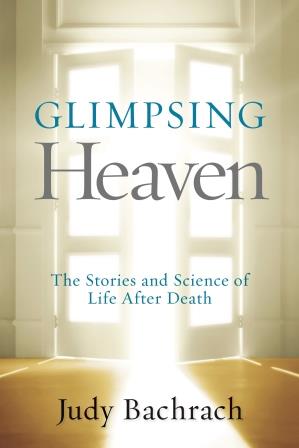 In her book, ‘Glimpsing Heaven – The Stories & Science of Life After Death’ (al) Judy Bacharach makes an interesting distinction between what for years have been known as NDE’s (near death experiences) and DE’s (death experiences) which are starting to take their place in the vernacular.
Bacharach argues (and with some significant medical support) that if the heart has stopped and there is no electrical activity in the brain to support the central nervous system, then the person is from a medical standpoint, dead.
They’re not near death, they are actually in a situation where time of death could be reasonably called, and indeed it would have been not too many years ago.
Pam Reynolds operation was so complicated it used the standstill operation technique which involves dramatically cooling the body, stopping the heart and draining blood from the brain to replicate death.
For a significant period of time Reynolds was effectively flat lining as surgeons battled to clip the aneurism and save her life.
The surgery didn’t exactly go smoothly, but it was a success against all the odds.
If the odds of her survival were slim, the chance that she would have such a vivid recall of many of the procedures conducted when she was in a ‘death state’ were infinitesimally slimmer.
Reynolds shocked the medical staff by recalling details and the use of instruments that she could have had no logical way of knowing about.
Even if she was conscious as some skeptics have suggested, her eyes were taped shut and ears plugged with monitors used to detect brain wave activity.
There was none.
She Wasn’t An Eagles Fan
She even complained to the lead surgeon afterward that she thought it insensitive that he was playing Hotel California with its lyrics ‘you can check out, but you can never leave’ in the operating room.
Reynolds claims she slipped out of her body and was able to observe much of the operation from on high, something that many DE’s (or travelers as they are known) report.
She also saw the obligatory white light and felt a massive sense of peace and that all was well – reports that are highly common occurrences among travelers.
Reynolds may have recovered physically from the operation, but she was never the same person again.
According to her daughters and husband she developed an almost saint-like ability to empathize with people and be able to say just the right thing to ease any pain they may be feeling.
Reynolds became more and more reclusive as she found her new ‘powers’ of empathy and understanding almost impossible to deal with.
Sadly she died from heart failure aged 53 in 2010 and I’m guessing after 4 years, she’s not coming back this time.
‘Glimpsing Heaven’ is a fascinating collection of stories similar to that of Reynolds in which normal people have medically died, but where their consciousness seems to have lived on.
What Is Consciousness And Where Does It Reside?
Cardiologist Pim van Lommel who has become a leading researcher into the field after being exposed to so many patients who had had DE’s, concludes that consciousness is stored ‘non-locally’.
A highly trained medical mind entertaining such a thought is shocking in and of itself, and maybe a reason to take this topic more seriously if you’re skeptical?
Most travelers report the popping out of their own body, the obligatory bright light of love and often seeing dead relatives and friends.
Many also report that all ‘conversations’ take place telepathically and a massive sense of peace and well-being overwhelming them.
There are hundreds of documented cases of DE’s from every corner of the globe (and by the way, the very occasional ones are not pleasant), but the problem is that it’s believed that most people don’t come forward and tell of their experiences for fear of ridicule.
One of the things that became apparent whilst reading ‘Glimpsing Heaven’ is that for the most part, the people interviewed weren’t the attention seekers with too much time on their hands that I expected.
Many were highly reluctant to talk about their experiences and some went years after their travels before they told anybody, including oftentimes, family members.
This book certainly highlighted the fact that there are many highly qualified and experienced medical professionals, many at the very top of the tree, who take DE’s seriously – where once they may have dismissed them out of hand.
We now know enough about consciousness to know that we don’t really know much about consciousness.
Where’s The Evidence?
Unfortunately however, it doesn’t really matter, because every single piece of evidence is anecdotal.
As such it cannot be proven and so will be continued to be debated ad infinitum.
However, whereas anecdotal evidence doesn’t prove anything in the traditional sense, it’s silly to disregard it.
Data is data, it’s how you interpret it that matters.
I said I was on the fence about life after death and I’m still on the fence after reading ‘Glimpsing Heaven’.
It’s the kind of book that if you already believe in life after death you could point to and say, ‘Ha! Look at that mountain of evidence. I told you so.’
But equally, it’s the kind of book that if you don’t believe in life after death you could point to and say, ‘Ha, all anecdotal evidence, I told you so.’
In other words, I doubt it will change the mind of anybody who has already decided they know the answer to something nobody knows the answer to.
It’s still well worth checking out though and I’m glad I didn’t rule out the opportunity to read it just because I really don’t like writing book reviews.
What’s Your Take?
My guess is you have an opinion one way or another on life after death.
So spill the beans in the comments and let’s debate!
Image Courtesy of Angelo Amboldi
Got it on my kindle just now and thank you very much. It really is nice that you replied to my comments. Thanks. Now – I’m off to bed with Ken. It IS 9.45 p.m. here and I live in a single storey house so actually I am just “moving rooms”. Then tomorrow I am starting a new business venture. As they say in Lancashire – Int life grand!!
Good night and thank you again.
X
Loved it, thank you. “Frank sent this” reminded me of all the interesting things my own kids said, “Buffling Joe” baffled us until we realised he meant Buffalo Bill. es-ar-em-ar-dee is how we all now spell Tesco. When my sister was going there to shop she used to spell it out in the car and one day the youngest came out with his own version hence it entered that wonderful thing “the family vocabulary” and we all call it es-ar-em-ar-dee.
Ken has it right but you can just see the multiple “arm folding” and “chin pulling in” going on in erudite circles. The problem is that this is a self perpetuating set of circumstances. I mentioned I am 63. I have a son of 39 and a daughter of 41. My son was the CLEVER one ( not that I cared. I was more interested in HAPPY) and my daughter was the lazy one. Now – my son is STILL the clever one and has achieved, achieved, achieved and I worry about him so much. He commits (to my mind) a cardinal sin every day – he bores himself. My daughter is STILL the lazy one but she is interested in life and couldn’t care less about achievements in the accepted sense of the word. She is much happier and lives in a world full of light and laughter.
You see (I explain to them), we are born without our permission, and the only job we have is to get from start to finish as pleasantly as possible. Now if it is in your “pleasant scenario” to go for it in business or education and cram yourself with qualifications then do it, but it doesn’t mean a thing in the grand scheme of things. If on the other hand, it makes you happy to embroider or paint or rescue animals or not clean house, then do that. The only thing is – you have to do enough to make your own money and you absolutely have to be kind.
I can hear all kinds of other conversations and opinions in my head that others COULD come up with. I still maintain that the Service Industry, that which makes nothing except money, must be the biggest destroyer of lives than anything. Human beings are meant to make stuff. We are still equipped with the skills, albeit sadly underused, to survive; to find and build shelter, to catch water, to find food etc. That set of skills is so underused in modern life it is no wonder that people need help. To just move money or services around to create “wealth” must be a terrible thing to be trapped in when you truly believe it is important. My son when small took a whole wooden sledge, a thing of beauty, and asked me if he could make a chair from it for me. I gave him some tools – a small saw, a hammer and some nails and said go ahead. He destroyed the sledge and built a wonky chair partially painted blue and was SO PROUD of his creation when he presented it to me. He was five and still recalls the pride he felt with his creation. In fact he was a bit put out that I haven’t still got it.
As I write, I am aware that well, it’s ok for me. I was clever at school, it was easy. My parents wanted me to go to Oxford or Cambridge. I didn’t want to go – I needed to earn some money. They were too poor to enforce the Ox-bridge thing so I escaped. I have no interest in how others see me, what they think of me, if I want to try something then I do, and my mind ( I was going to say brain but that is busy at the moment digesting my breakfast and working my hands as I type) is an interesting place to be and presents me with many questions and theories. I wish I could take what I have and share it out. But only one of my children has taken their share, so how can I connect with others?
once again, thanks for Ken (I am a poet) and I shall have a look at more of is stuff because he is funny. And he thinks the way I do so I am boudn to like him, yes??
XX
Get his book . ‘The Element’ it’s awesome. There’s also another talk of his on Ted if you do a search.
I shall have to google Ken Robinson. He sounds like a man after my own heart. He may well explain the concept better than I can. My children roll their eyes as I try to explain. LOL
Check this out. My all time favorite Ted talk.
http://www.ted.com/talks/ken_robinson_says_schools_kill_creativity?language=en
I didn’t read all the comments – each to their own. Just to say that I am 63 and my mother who is 82, a very practical lady and not given to flights of fancy, told me a story of the birth of my younger sister. It was a home birth – I was only ten years old and there was some sort of complication which resulted in the midwife having to call the doctor or the ambulance as my mum was bleeding after the baby was born. She recalls being “above” everyone and looking down at the bed and the people around the bed and wondering why they were so concerned and upset because she felt so peaceful where she was. She kept wanting HER mother who was present at the birth, to stop calling her back. The resulting saving of her life whatever they did meant that she had to return but she didn’t really want to. Anyway she is 82 now and was only about 30 then so she has had a good enough do out of it. AND she is quite confident that when her time does come, it really will be a pleasant exchange of condition. Not having had her experience I am quite content to live my life as I have it and not to worry about what comes after. I believe that we revisit because as a child I knew things that I never should have known as if I had experienced them for myself.
It is a wonderful life and I love your 70 things about the brain. I get the thing about the brain and the mind being separate entities. It is the job of the brain to keep you well physically and, well, er mentally. Which is why when you are trying to give something up which previously made you feel good, (chocolate, cigarettes, booze whatever) it can be so hard because your brain knows that in the past these things had contributed to your feeling of wellbeing – a situation it works 24 hours a day to maintain. So as you are trying hard to give up “whatever”, say ice cream your brain is whispering “go on, you know you want to. It would only take you 20 minutes to drive to the store” and so on. But because I KNOW it is my brain talking and not “ME” I can decide not to listen. This is a complicated little explanation of a theory which is crystal clear to me and another reason now to get hung up about your body, Look after it but don’t fret – it is only the vehicle that enables the mind to get around.
That reminds me of a Sir Ken Robinson quote that academics only have bodies to get their brains to meetings on time!
Despite the fact that I’ve rejected much of the religious beliefs I was raised with, I have a hard time rejecting the teaching that nothing happens when we die. And yet I have a hard time dismissing the idea that we’re all connected in a way, like that one traveler saw. I just hope that when my number is called, I’m ready to go!
Thanks for being on the tour, Tim!
Once upon a time in my country, a priest has a lesson with children. He ask them
– Who want to go to heaven?
They raised their hands.
– Those who want to go to heaven, get up and go right of me – said priest.
One little boy stayed in his place.
– You don’t want to go to heaven?
– I want – Boy answered.
– So why did you stay in your place?
– Maybe – said little boy – just not yet….
:o)
Ha, love it!
And it’s not too soon!
Over many years I’ve read a large stack of books on metaphysics, but more popularly referred to as “New Age” philosophy, always from a detached perspective and with an open mind. Read lots of books on religion, the history thereof, and theology, too, and for the same reason, that being knowledge. Answers are another matter entirely, and remain elusive as ever.
One relatively consistent theme is that, upon death one will experience exactly what one believes or expects to happen. Think about the implications of that! A question that begs asking in any investigation of NDEs, but seldom is, thus is, “What did you believe would happen? From the deepest part of your core beliefs where your personal truths lie?”
One channeled entity related that there is a place where countless souls lie in stasis, locked in relative non-being because they deeply believed that there is no such thing as life after death. Incredibly sad when you think about it. And the irony being, how is one unlocked from such a state if they don’t believe in the possibility in the first place? The underlying assumption being, first there is thought, which descends into light, and ultimately into matter. Which is another way of saying that the universe unfolds pretty much as we expect it to. Personal responsibility taken to the nth degree, so to speak….God forbid, eh!
I told a somewhat devoutly religious friend of mine once that, were Jesus to manifest this very day on Any Street, Anywhere, and proclaim Himself mankind’s Saviour, more than likely Christians would be the first to get in line to nail Him back up on a cross, and very hastily, too. Different situation, but somewhat same paradox.
All of which reminds me of that ever so famous movie line so magnificently voiced by Jack Nicholson: “You want the truth? You can’t handle the truth!”
Mankind’s eternal dilemma in a nutshell.
That’s an excellent point re the getting what we expect.
Shit, I need to adjust my expectations!
And yeh the Jesus paradox often gets lost. He would be Baker-acted if he came back to the US.
Hi Tim! This is the reason I am always keen to return to your “Daring Adventure” blog: You pick amazing subjects and you have a way of “picking” through the issues.
Is there life after death? Well, I would suggest to you a “Daring Adventure” and simply entertain the possibility! Wouldn’t it be a great shame if the Tim Brownson with all his knowledge, quirky sense of humour and ability to coach people, would cease to exist at the moment of death? Nonsense, I say – won’t happen…St Peter might want to wash your mouth with soap at times – that’s all. If you die and there is nothing, well – then there is nothing and you will have lost nothing. But if you entertained the possibility of an afterlife, you might be pleasantly surprised. Of course, I will give you an Irish blessing right now – just in case: “May you be in heaven, half an hour before the devil knows you’re dead!”
Commentators Olivier and Zbyszek have already said most of what I was going to comment on. And there are so many books on DE or NDE. Apart from those already mentioned, one that intrigued me many years ago was one by Dr George G. Richie MD –“Return from tomorrow” – his own experience, when he died of pneumonia. Here’s a website to browse: http://www.near-death.com/ritchie.html.
A lot of otherwise credible personalities wish to dismiss DE / NDE experiences as “hallucinations”. Their belief is as “anecdotal” as is the belief in life after death.
Ask your Buddhist mentor, what does she think about life after death? She might respond that Buddhists do have a concept of heaven and hell, but that these places are not necessarily permanent in nature. Christianity has a definite teaching on this – and once you are able to read between the lines in the Bible (the use of language/words 2000 years ago needs to be reckoned with in interpretations), you will note the confirmation of an afterlife – hot or not hot.
As for a patient under anaesthetic to be able to recount exactly what happened during her operation – recounting what he or she have heard and seen – this is often attributed to an astral out-of-the-body experience. “Astral Travel” – where you separate from your physical body – is something that can be learnt and I have personal experience of this, but did not continue…it was a bit scary.
Anyway: Tim Brownson, once flat lined, will simply leave behind the old physical body and enter into a new phase, in a life after life – and he will continue his calling to the benefit of others. Howzatt??
What I have been thinking though, is that there may be a possibility of those “Believers” recently deceased to experience an afterlife according to their own expectations…Any commentators response to this idea? Who will greet you when you’re dead? Shiva, the Hindu god or Jesus or…
I am meeting with Meredith today so I will ask her. It seems to me that Buddhists are split as they are on many things, but I shall get her take for sure.
“We now know enough about consciousness to know that we don’t really know much about consciousness.”
Gosh, I love it when you say deep stuff like this.
I’ve heard a few first-hand stories from people who aren’t all that religious talking about their experiences, and I believe their stories. I’ve also read some stories where people have said they saw nothing. I believe their stories, too. I think that this experience is as individual as the person who had it (or didn’t). For my take, I’m hoping for the experience that Buffy (from Buffy and the Vampire Slayer) had before her friends yanked her back. But only at the very end–no glimpses until it’s time.
You’re leaving me hanging, I’ve never seen Buffy!!!
Wow Tim. It is far beyond the borders of life coaching :) (I think)
1. People can have “knowledge” / “experiences” from different “areas” or “levels”. In the west sphere of ppl civilization we assume, that objective knowledge can be obtain only by reasoning and reproducible experiences. We called that method as – “scientific method” and we assume that what it gives to us, is just truth.
2. There are different subjects of perception. Ones can be perceived quite direct and we can verify their genuiness in a very demonstrative way. Others are more elusive, and although we are sure about them we have only signs, indicators of what we think about them is true. For example, it is easy to verify if it is pressure in tires of our vehicle. But nobody saw a force of gravitation, although everybody is quite sure it exist.
3. We can take attitude that “we don’t know” or we don’t decide about something that we have no reasonable proof of existence. It’s easy and looks smart. But often we can’t act and live that way, because different decisions requires different actions. If you have covered your eyes and you have been told, that around you is an abbys and you should stay, on the other hand someone else told you that around you is a meadow and you should walk, you have to choose your actions, you have to live as if one or another will be true to you. Your live cannot be undecided.
Now. You can’t have a proof or a sure answer for questions like: “If it is life after death?” or “If the God exist”. What is more, you can’t find satisfying answers for that kind of questions, through reasonable thinking, and from your current “objective” point of view. Everything you can get will be clues and signs, and “maybe’.
For some people these clues will be convincing, for some not. There we come to the “other” ways of cognition. For example it is hard to explain to someone something about God, if he doesn’t believe in such being, because only unconditional faith can give one an experience, that can convince him about what he believes.
So we can’t know. We cant “grasp” with our scientific minds, nothing more, that can be a subject of pure science. If we want to, we have to go out of our previous way of thinking, way of perceiving. We cannot prove to anybody that we are right or that what we believe is right, because such an attempt will be taken on scientific/resonable basis which is inadequate.
From my point of view, I think that life not ends with so called “death”. Can I give you and others convincing argument? I don’t think so. Why I believe so? Mainly because of two reasons:
a) I am a Christian and as such I believe that life not ends with death. I know that it is not “trendy” or “best selling” nowadays but it is like it is.
b) If death will be the end of consciousness then nothing will ever exist, because eventually with death of last man, every knowledge every memory, will be lost forever, and we will never exist at all.
———————————————
sorry for eventual language mistakes, but still i am not an English speaker
Well in this instance, I hope you’re right!
Fuck me, you went there!!!
Even if it costs me so much to admit it right now: you are cool and I am ready to do you “la bise” as a sign of respect- if we ever meet- (i.e. a kiss on the cheeks like real men do in France to say hello)…
Ok, as I expect to suddenly hear crickets in this comment section, let me give it a shot.
So…
It is a taught one really!
The Pam Reynolds case is compelling, similar to all the cases captured by Raymond Moody.
Elisabeth Kubler Ross reported similar stories.
Along with Pim van Lommel you have other doctors such Mario Beauregard and Sam Parnia who have released troubling facts.
We can almost add Jill Bolte Taylor and her famous Ted talk in the pot.
So, yes, it is really hard to just ignore the data, but it is even harder to get to any conclusion.
One thing bothers me a lot though: some of the descriptions of this supposedly “after-life”!
Shit, it looks like a real boring place with rainbows-unicorns-angels-and-constant-Celine-Dion-music…I would rather have an old-sweaty blues-bar with free drinks, but that’s just me.
And how fascinating that those NDEs follow similar patterns to what is described in the Bardo Thodol and the Egyptian Book of the Dead.
Personally, I don’t think we will “ever” know as it is quite hard to conduct a “scientific peer review” on the topic (really, I don’t see how we can achieve this)…so until we “go” there, it is really open…but how fucking fascinating!
Actually, maybe, there’s another way to look at this.
Kenneth Ring studied the people who had an NDE. He was curious to see how they would behave after their experience.
And the changes (personality, behaviors…) were undeniable, radical and deep: they were no more interested by money or material things, nor by the pursuit of a successful career, nor by the accumulation of wealth. Almost all them become compassionate, spiritual (not religious…) and caring about others.
Something to wonder…
Well Keifer Sutherland and Julia Roberts did it in Flatliners, so no idea why you think it’s not possible.
There was so much I could have got into with this book (some of which you mention) and yes you’re right, the experience tends to profoundly change people.
And the fact that everything was usually as you’d imagine, men in long robes, dead relatives etc makes me suspicious it’s consciousness having one last laugh on us.
As Jim Jeffries once said, ‘God isn’t going to invite you in and say, “Jim, you’ve been such a good boy. See that big tiited whore with a line of coke on her chest, go and knock yourself out son”
Well as the author of GLIMPSING HEAVEN, all I can say is that no one was more dubious (read….disbelieving…) about consciousness after death than I. But what researching this book taught me — and it taught me a lot — is that NOT believing is as much a religion as believing without facts to back things up.
We now have an array of evidence . But we do need more.
And by the way — the clinical definition of death — no heartbeat, no brain stem activity, no response to pain and no breathing is the accepted one by doctors and scientists of today
“But what researching this book taught me — and it taught me a lot — is that NOT believing is as much a religion as believing without facts to back things up.”,/i>
I couldn’t agree more with that.